
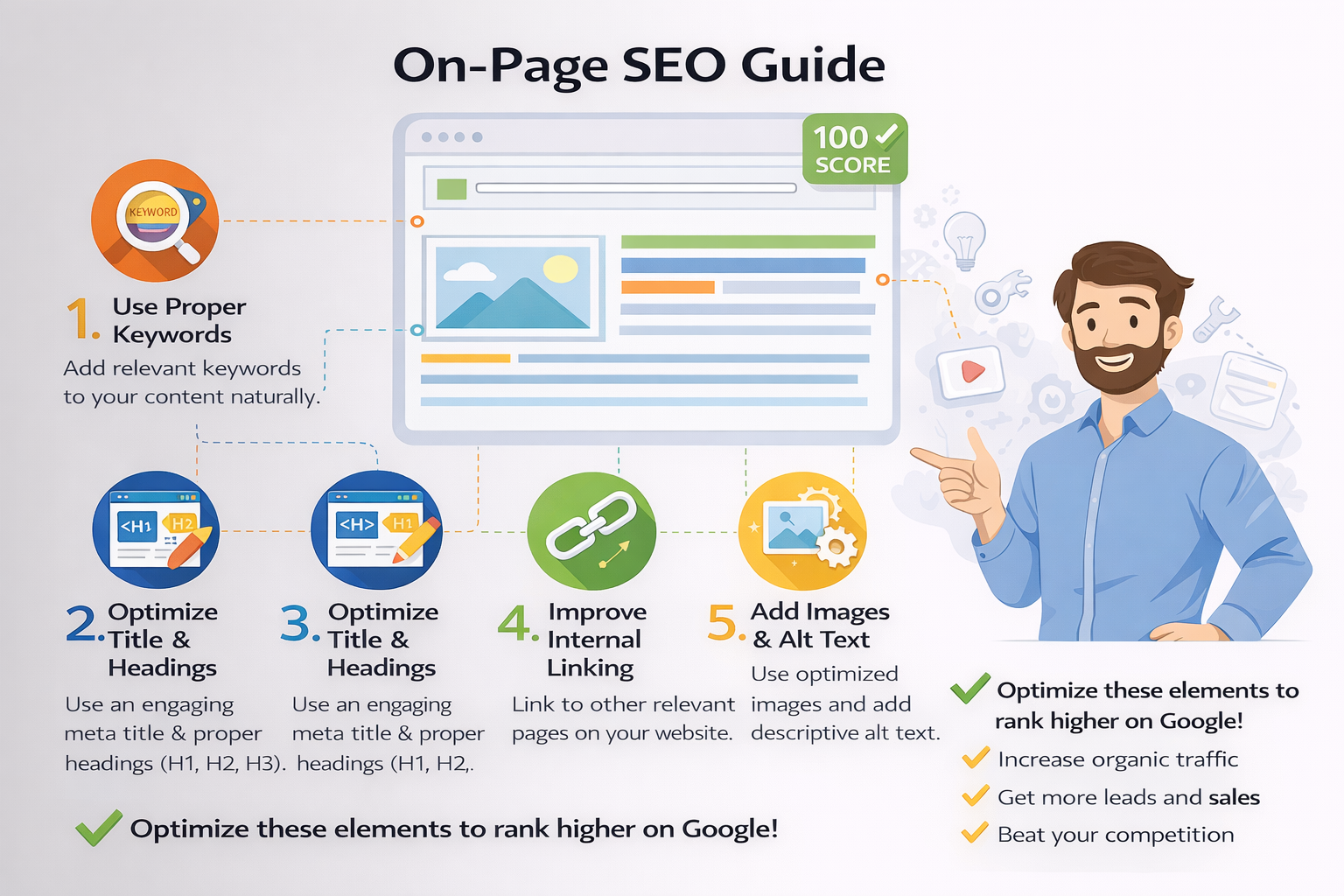
On-page SEO is one of the most important parts of search engine optimization. It focuses on optimizing elements within your website to improve search engine rankings and user experience. Proper on-page SEO helps search engines understand your content and rank your website higher in search results.
Whether you run a business website, blog, or eCommerce store, following on-page SEO best practices can increase visibility, attract visitors, and generate more leads.
In this guide, you will learn what on-page SEO is, why it is important, and how to optimize your website step by step.
What is On-Page SEO?
On-page SEO refers to the process of optimizing individual web pages to improve their ranking on search engines like Google. It involves optimizing content, keywords, headings, images, and technical elements within the website.
In simple terms, on-page SEO helps search engines understand your website content and determine whether it is relevant to user searches.
Why is On-Page SEO Important?
On-page SEO is important because it directly affects how search engines rank your website. Proper optimization improves visibility, increases traffic, and enhances user experience.
Key benefits of on-page SEO:
- Improves search engine rankings
- Increases website traffic
- Enhances user experience
- Boosts page speed
- Improves website performance
- Helps generate leads and sales
Key Elements of On-Page SEO
Successful on-page SEO includes several important elements that work together to improve rankings.
Title Tags
Title tags are the clickable headlines that appear in search engine results. They help search engines understand the topic of your page.
Best practices for title tags:
- Keep the title under 60 characters
- Include the primary keyword
- Make the title clear and relevant
- Avoid keyword stuffing
Optimized title tags improve click-through rates and search rankings.
Meta Description
A meta description is a short summary of your webpage that appears below the title in search results.
Best practices for meta descriptions:
- Keep the description between 150 and 160 characters
- Include the primary keyword
- Write a clear and engaging summary
- Encourage users to click
A well-written meta description improves visibility and user engagement.
Headings (H1, H2, H3)
Headings help organize content and make it easier for users and search engines to understand your webpage.
Best practices for headings:
- Use one H1 tag per page
- Use H2 and H3 tags for subheadings
- Include keywords naturally
- Keep headings clear and descriptive
Proper headings improve readability and SEO performance.
Keyword Optimization
Keywords are the words and phrases people use to search online. Using the right keywords helps search engines match your content with user searches.
Best practices for keyword optimization:
- Use keywords naturally in content
- Include keywords in headings
- Avoid excessive keyword usage
- Focus on relevant search terms
Proper keyword usage improves search rankings.
Content Quality
High-quality content is essential for on-page SEO success. Search engines prioritize useful, informative, and relevant content.
Content should be:
- Clear and easy to understand
- Informative and valuable
- Well-structured
- Regularly updated
Quality content attracts visitors and improves rankings.
Image Optimization
Images improve user experience and make content more engaging. Proper image optimization helps search engines understand visual content.
Best practices for image optimization:
- Use descriptive file names
- Add alt text to images
- Compress images to reduce size
- Use high-quality visuals
Optimized images improve website performance and SEO.
Internal Linking
Internal linking connects different pages within your website. It helps search engines discover content and improves navigation.
Benefits of internal linking:
- Improves website structure
- Increases page views
- Enhances user experience
- Helps search engines index pages
Internal linking strengthens overall SEO.
URL Structure
A clean and simple URL structure makes it easier for search engines and users to understand your webpage.
Best practices for URL structure:
- Keep URLs short and descriptive
- Use keywords in URLs
- Avoid unnecessary characters
- Use hyphens instead of underscores
Proper URLs improve search visibility.
Mobile-Friendly Design
Most users access websites through mobile devices. Google prioritizes mobile-friendly websites in search rankings.
Mobile optimization includes:
- Responsive design
- Easy navigation
- Fast loading speed
- Readable text
Mobile-friendly websites perform better in search results.
Page Speed Optimization
Website speed is a critical ranking factor. Slow websites can frustrate users and reduce search rankings.
Ways to improve page speed:
- Compress images
- Use fast hosting
- Enable caching
- Reduce unnecessary scripts
Fast websites provide better user experience.
On-Page SEO Checklist
Use this checklist to ensure your webpage is fully optimized.
On-page SEO checklist:
- Use a clear title tag
- Write a strong meta description
- Add proper headings
- Optimize keywords
- Create high-quality content
- Optimize images
- Use internal links
- Improve page speed
- Ensure mobile responsiveness
- Use SEO-friendly URLs
Following this checklist improves SEO performance.
Common On-Page SEO Mistakes to Avoid
Avoiding mistakes helps improve website rankings.
Common mistakes include:
- Using duplicate content
- Ignoring meta descriptions
- Overusing keywords
- Slow website speed
- Poor website structure
Fixing these mistakes improves SEO results.
Who Needs On-Page SEO?
On-page SEO is essential for many types of websites and businesses.
Businesses that need on-page SEO include:
- Small businesses
- Startups
- Clinics and hospitals
- Educational institutions
- eCommerce stores
- Service providers
- Bloggers
Any website that wants better search rankings needs on-page SEO.
Frequently Asked Questions About On-Page SEO
1) What is on-page SEO?
On-page SEO is the process of optimizing content and elements within a website to improve search engine rankings.
2) Why is on-page SEO important?
On-page SEO is important because it helps search engines understand your content and improves website visibility.
3) How long does on-page SEO take to show results?
On-page SEO improvements can show results within a few weeks to a few months.
4) What is the most important on-page SEO factor?
High-quality content is one of the most important on-page SEO factors.
5) Can small businesses use on-page SEO?
Yes. On-page SEO is effective for businesses of all sizes and helps improve online visibility.
Conclusion
On-page SEO is a fundamental part of search engine optimization that helps websites rank higher on search engines and attract more visitors. By following proper on-page SEO techniques and best practices, businesses can improve visibility, increase traffic, and achieve long-term growth.
Consistent optimization and quality content are the keys to successful on-page SEO.