
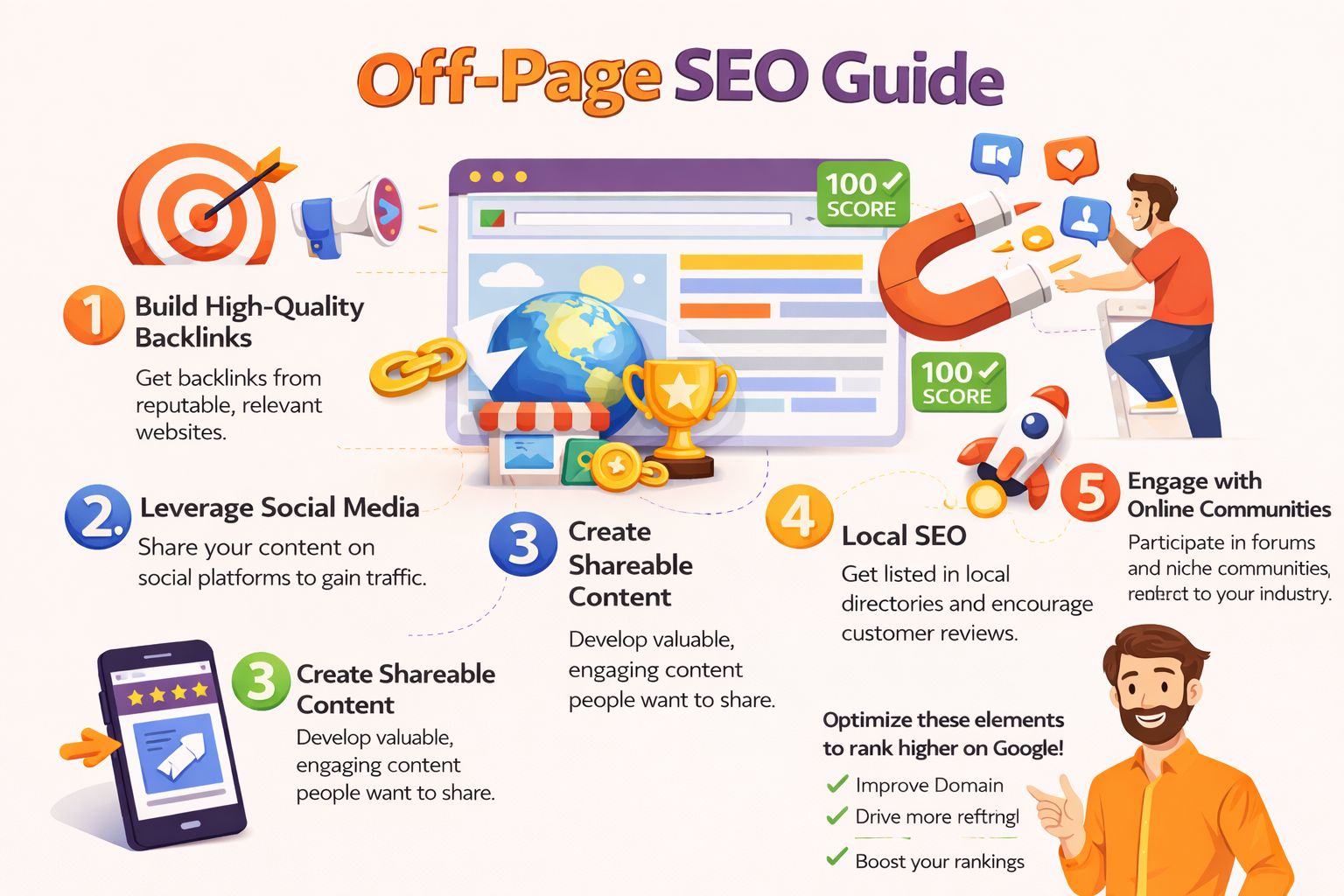
Off-page SEO is an important part of search engine optimization that focuses on activities outside your website to improve search engine rankings. While on-page SEO optimizes website content, off-page SEO builds credibility, authority, and trust through external signals such as backlinks and online mentions.
Businesses that use effective off-page SEO strategies can improve website visibility, increase traffic, and rank higher on search engines like Google.
In this guide, you will learn what off-page SEO is, why it is important, and how to implement off-page SEO techniques step by step.
What is Off-Page SEO?
Off-page SEO refers to optimization activities performed outside your website to improve search engine rankings and domain authority. It mainly focuses on building backlinks, increasing brand mentions, and improving online reputation.
In simple terms, off-page SEO helps search engines trust your website.
Search engines consider off-page signals as indicators of website quality and credibility.
Why is Off-Page SEO Important?
Off-page SEO is important because search engines use external signals to determine how trustworthy and authoritative a website is. Websites with strong backlinks and online presence usually rank higher in search results.
Key benefits of off-page SEO:
- Improves search engine rankings
- Builds website authority
- Increases website traffic
- Enhances brand visibility
- Strengthens online reputation
- Supports long-term SEO success
Off-page SEO helps businesses compete in the digital market.
Key Components of Off-Page SEO
Off-page SEO includes several important activities that improve website authority and search rankings.
Link Building
Link building is the process of getting backlinks from other websites to your website. Backlinks act as votes of confidence that signal trust to search engines.
Common link building methods:
- Guest posting
- Business directory submissions
- Blog commenting
- Content sharing
- Partnerships with other websites
Quality backlinks improve search rankings and website authority.
Social Media Marketing
Social media plays an important role in off-page SEO by increasing content visibility and brand awareness.
Benefits of social media for off-page SEO:
- Drives website traffic
- Improves brand recognition
- Encourages content sharing
- Builds customer relationships
Active social media presence supports SEO performance.
Guest Posting
Guest posting involves writing content for other websites or blogs in exchange for backlinks.
Benefits of guest posting:
- Builds high-quality backlinks
- Increases brand exposure
- Reaches new audiences
- Improves website authority
Guest posting is one of the most effective off-page SEO strategies.
Online Directory Submissions
Directory submission involves listing your business information on online directories.
Examples of directories:
- Business listing websites
- Local directories
- Industry-specific directories
Directory listings improve visibility and local SEO performance.
Brand Mentions
Brand mentions occur when other websites or platforms mention your business name without linking to your website.
Search engines consider brand mentions as trust signals.
Benefits of brand mentions:
- Improves brand awareness
- Builds credibility
- Supports SEO performance
Brand mentions strengthen online reputation.
Content Marketing and Sharing
Creating valuable content encourages other websites to link to your content.
Examples of shareable content:
- Blog posts
- Infographics
- Videos
- Research articles
Content sharing increases backlinks and website authority.
Step-by-Step Off-Page SEO Strategy
Follow these steps to implement an effective off-page SEO strategy.
Step 1: Create High-Quality Content
Quality content attracts backlinks and encourages sharing.
Step 2: Build Backlinks
Focus on getting backlinks from trusted and relevant websites.
Step 3: Promote Content on Social Media
Share content on social media platforms to increase visibility.
Step 4: Monitor Backlinks
Track backlinks regularly to ensure quality and relevance.
Step 5: Maintain Online Reputation
Respond to reviews and maintain a positive online presence.
Common Off-Page SEO Mistakes to Avoid
Avoiding mistakes helps improve SEO performance.
Common mistakes include:
- Buying low-quality backlinks
- Using spammy websites
- Ignoring social media
- Posting duplicate content
- Neglecting reputation management
Fixing these mistakes improves website credibility.
How Long Does Off-Page SEO Take to Show Results?
Off-page SEO requires consistent effort and time.
Typical timeline:
- Initial improvements: 1 to 2 months
- Noticeable results: 3 to 6 months
- Strong authority growth: 6 to 12 months
Results depend on competition and link quality.
Who Needs Off-Page SEO?
Off-page SEO is useful for many types of businesses and websites.
Businesses that need off-page SEO include:
- Small businesses
- Startups
- Clinics and hospitals
- Educational institutions
- eCommerce stores
- Service providers
- Bloggers
Any website that wants higher rankings needs off-page SEO.
Frequently Asked Questions About Off-Page SEO
1) What is off-page SEO?
Off-page SEO is the process of improving website rankings through activities outside the website, such as link building and brand mentions.
2) Why is off-page SEO important?
Off-page SEO is important because it builds trust, authority, and credibility, which help websites rank higher on search engines.
3) What is the most important off-page SEO technique?
Link building is considered the most important off-page SEO technique because backlinks improve website authority.
4) How long does off-page SEO take to show results?
Off-page SEO usually takes 3 to 6 months to show noticeable improvements.
5) Can small businesses use off-page SEO?
Yes. Off-page SEO is effective for businesses of all sizes and helps improve online visibility.
Conclusion
Off-page SEO is a critical part of search engine optimization that helps websites build authority and improve rankings. By using effective off-page SEO techniques such as link building, guest posting, and social media promotion, businesses can increase traffic and achieve long-term success.
Consistent effort and quality backlinks are the keys to successful off-page SEO.