
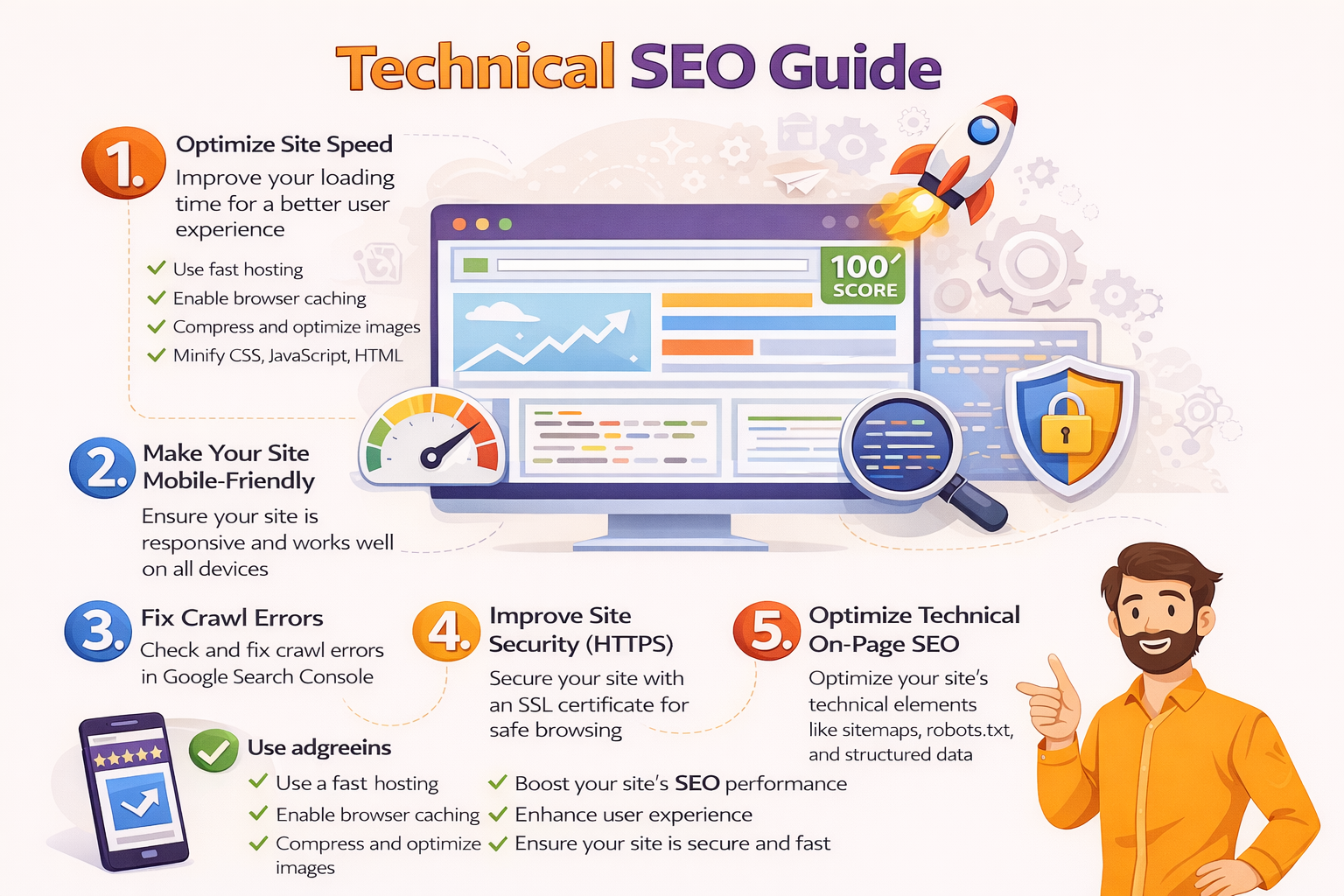
Technical SEO is a critical part of search engine optimization that focuses on improving the technical aspects of a website. It ensures that search engines can easily crawl, index, and understand your website content. Proper technical SEO improves website performance, user experience, and search rankings.
In today’s digital environment, search engines prioritize websites that load quickly, are mobile-friendly, and provide a secure browsing experience. Businesses that implement technical SEO best practices can increase visibility, attract more visitors, and improve overall website performance.
In this guide, you will learn what technical SEO is, why it is important, and how to implement technical SEO step by step.
What is Technical SEO?
Technical SEO refers to the process of optimizing the technical structure of a website to improve search engine crawling and indexing. It focuses on website performance, security, and usability.
In simple terms, technical SEO helps search engines access and understand your website.
Technical SEO includes:
- Website speed optimization
- Mobile-friendly design
- Secure website (HTTPS)
- XML sitemap
- Crawl error fixing
- Structured data implementation
Why is Technical SEO Important?
Technical SEO is important because search engines rely on technical signals to rank websites. A well-optimized website performs better in search results and provides a better user experience.
Key benefits of technical SEO:
- Improves search engine rankings
- Enhances website performance
- Increases website speed
- Improves user experience
- Supports SEO success
- Reduces technical errors
Technical SEO forms the foundation of a successful SEO strategy.
Key Components of Technical SEO
Technical SEO involves several important elements that help improve website performance.
Website Speed Optimization
Website speed is a major ranking factor. Slow websites can frustrate users and reduce search rankings.
Ways to improve website speed:
- Compress images
- Use fast web hosting
- Enable caching
- Minimize code
- Use a content delivery network (CDN)
Fast websites improve user experience and SEO performance.
Mobile-Friendly Design
Most users browse the internet using mobile devices. Google prioritizes mobile-friendly websites in search rankings.
Mobile optimization includes:
- Responsive design
- Easy navigation
- Readable text
- Fast loading speed
Mobile-friendly websites perform better in search results.
Secure Website (HTTPS)
Website security is essential for protecting user data and building trust.
HTTPS ensures secure communication between users and websites.
Benefits of HTTPS:
- Protects sensitive data
- Builds user trust
- Improves search rankings
- Enhances website security
Secure websites are preferred by search engines.
XML Sitemap
An XML sitemap is a file that lists all important pages on your website. It helps search engines discover and index your content.
Benefits of an XML sitemap:
- Improves indexing
- Helps search engines crawl pages
- Increases visibility
- Enhances SEO performance
Submitting a sitemap to search engines improves website discovery.
Robots.txt File
The robots.txt file tells search engines which pages to crawl and which pages to ignore.
Proper robots.txt configuration:
- Prevents duplicate content
- Controls search engine access
- Improves crawling efficiency
Correct usage improves SEO performance.
Fixing Crawl Errors
Crawl errors occur when search engines cannot access certain pages on your website.
Common crawl errors include:
- Broken links
- Missing pages
- Server errors
- Redirect issues
Fixing crawl errors improves indexing and website performance.
Structured Data (Schema Markup)
Structured data helps search engines understand website content more clearly.
Benefits of structured data:
- Improves search visibility
- Enhances rich results
- Increases click-through rates
- Improves user experience
Schema markup helps websites stand out in search results.
Canonical Tags
Canonical tags prevent duplicate content issues by telling search engines which version of a page is the main one.
Benefits of canonical tags:
- Avoid duplicate content
- Improve SEO performance
- Consolidate ranking signals
Proper use improves search rankings.
Technical SEO Checklist
Use this checklist to ensure your website is technically optimized.
Technical SEO checklist:
- Improve website speed
- Ensure mobile-friendly design
- Use HTTPS security
- Create XML sitemap
- Configure robots.txt file
- Fix crawl errors
- Add structured data
- Use canonical tags
- Optimize URL structure
- Monitor website performance
Following this checklist improves website health.
Common Technical SEO Mistakes to Avoid
Avoiding mistakes helps maintain website performance.
Common mistakes include:
- Slow website speed
- Broken links
- Duplicate content
- Missing sitemap
- Poor mobile optimization
Fixing these mistakes improves SEO results.
Who Needs Technical SEO?
Technical SEO is important for all types of websites and businesses.
Businesses that need technical SEO include:
- Small businesses
- Startups
- Clinics and hospitals
- Educational institutions
- eCommerce stores
- Service providers
- Bloggers
Any website that wants better performance needs technical SEO.
Frequently Asked Questions About Technical SEO
1) What is technical SEO?
Technical SEO is the process of optimizing the technical aspects of a website to improve search engine crawling and indexing.
2) Why is technical SEO important?
Technical SEO is important because it improves website performance, speed, and search engine rankings.
3) How often should technical SEO be performed?
Technical SEO should be checked regularly, at least once every few months.
4) Does technical SEO affect rankings?
Yes. Technical SEO directly affects rankings because search engines prioritize fast, secure, and well-structured websites.
5) Can small businesses use technical SEO?
Yes. Technical SEO is essential for businesses of all sizes to improve website performance and visibility.
Conclusion
Technical SEO is the foundation of a successful SEO strategy. It ensures that search engines can crawl, index, and understand your website effectively. By implementing technical SEO best practices, businesses can improve website performance, increase visibility, and achieve long-term growth.
Consistent technical optimization helps websites stay competitive in search results.