
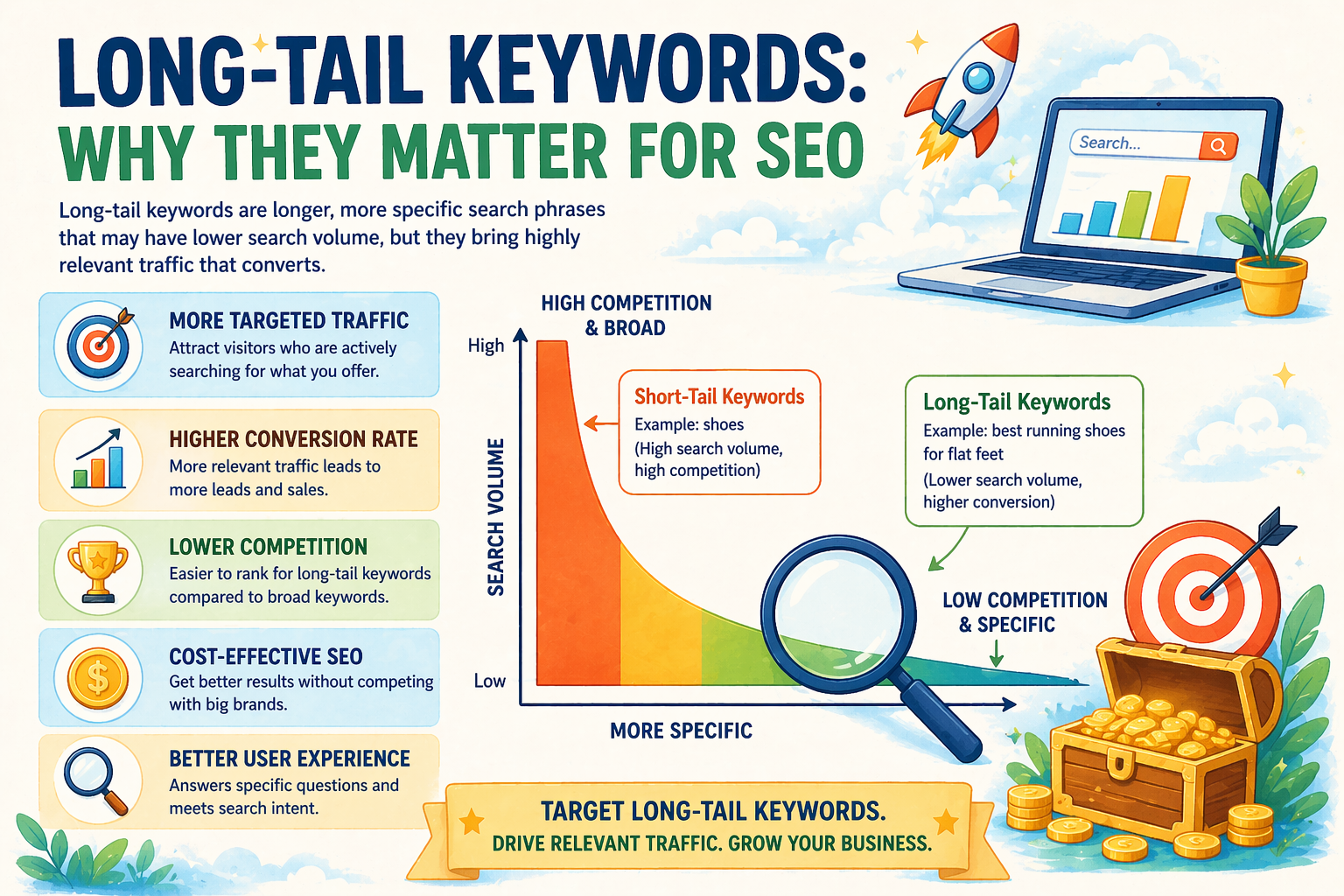
Long-tail keywords play a crucial role in modern SEO and digital marketing. While many businesses focus on broad keywords, long-tail keywords often deliver better results because they target specific search queries.
These keywords help websites rank faster, attract the right audience, and generate more leads. Businesses that use long-tail keywords effectively can compete even in highly competitive industries.
In simple terms, long-tail keywords help you reach customers who are ready to take action.
What Are Long-Tail Keywords?
Long-tail keywords are longer and more specific phrases that people type into search engines when they are looking for something particular.
They usually contain three or more words and have lower competition compared to short keywords.
Examples of Long-Tail Keywords
- digital marketing services for small businesses
- SEO company for local businesses
- website design services near me
- affordable digital marketing agency in India
- social media marketing services for startups
These keywords target a specific audience and often lead to higher conversions.
Short-Tail vs Long-Tail Keywords
Understanding the difference between short-tail and long-tail keywords is important for SEO strategy.
Short-Tail Keywords
Short-tail keywords are broad and competitive.
Examples:
- digital marketing
- SEO services
- website design
Characteristics:
- High search volume
- High competition
- Lower conversion rate
Long-Tail Keywords
Long-tail keywords are specific and targeted.
Examples:
- digital marketing services for small businesses
- best SEO services for local businesses
- website development company for startups
Characteristics:
- Lower competition
- Targeted traffic
- Higher conversion rate
- Easier to rank
Why Long-Tail Keywords Are Important for SEO
Long-tail keywords offer several advantages that make them essential for website growth.
Easier to Rank
Long-tail keywords have less competition, making it easier for new websites to rank on search engines.
Attract Targeted Traffic
These keywords bring visitors who are specifically searching for your services.
Higher Conversion Rates
People using long-tail keywords often have a clear intent, which increases the chances of conversion.
Improves SEO Performance
Using long-tail keywords helps search engines understand your content better.
Supports Voice Search
Many voice searches use long-tail phrases, making them important for modern SEO.
Benefits of Using Long-Tail Keywords for Businesses
Businesses that use long-tail keywords can experience significant growth.
Key Benefits
- Faster ranking on Google
- More qualified leads
- Lower competition
- Better user targeting
- Increased website traffic
- Higher conversion rates
Long-tail keywords are especially useful for small businesses and startups.
How to Find Long-Tail Keywords
Finding the right long-tail keywords is simple when you follow the right process.
1) Use Google Search Suggestions
Start typing a keyword into Google and observe the suggested phrases.
Example:
digital marketing services
Google may suggest:
- digital marketing services for small business
- digital marketing services near me
2) Analyze Customer Questions
Customer questions often become long-tail keywords.
Examples:
- How to improve website traffic
- What is the best SEO strategy
- How to generate leads online
These questions can be used as blog topics.
3) Use Keyword Research Tools
Keyword research tools help identify long-tail keywords quickly.
Popular tools include:
- Google Keyword Planner
- Ubersuggest
- SEMrush
- Ahrefs
- Google Search Console
These tools provide valuable keyword insights.
4) Check Competitor Websites
Competitor websites can reveal useful keyword opportunities.
You can:
- Review their blog topics
- Analyze their ranking keywords
- Identify content gaps
This helps discover keywords that are already working in your industry.
5) Add Location-Based Keywords
Location keywords help businesses attract local customers.
Examples:
- digital marketing services in Hyderabad
- SEO services in India
- website design company near me
These keywords improve local search visibility.
Best Practices for Using Long-Tail Keywords
Using long-tail keywords correctly improves SEO performance.
Follow These Best Practices
- Use one primary keyword per page
- Include keywords naturally in content
- Add keywords in headings
- Use keywords in meta description
- Avoid keyword stuffing
- Focus on user intent
- Update content regularly
Common Mistakes to Avoid
Avoid these mistakes when using long-tail keywords.
- Targeting irrelevant keywords
- Using too many keywords
- Ignoring search intent
- Copying competitor content
- Not updating keyword strategy
- Keyword stuffing
Fixing these mistakes improves rankings.
When Should You Use Long-Tail Keywords?
Long-tail keywords are useful in many situations.
Use Them When
- Your website is new
- Competition is high
- You want faster rankings
- You want targeted traffic
- You want more leads
- You target specific services
They are particularly effective for service-based businesses.
Frequently Asked Questions (FAQs)
What are long-tail keywords in SEO?
Long-tail keywords are specific search phrases that contain three or more words. They target a narrow audience and usually have lower competition.
Why are long-tail keywords important?
Long-tail keywords help websites rank faster, attract targeted visitors, and improve conversion rates.
Are long-tail keywords better than short keywords?
Long-tail keywords are often better for new websites because they are easier to rank and attract more relevant traffic.
How many long-tail keywords should be used in one blog?
Typically:
- 1 primary keyword
- 3 to 5 secondary keywords
This helps maintain proper SEO balance.
Do long-tail keywords increase website traffic?
Yes. Long-tail keywords attract targeted visitors who are more likely to convert into customers.
Conclusion
Long-tail keywords are one of the most effective tools for improving SEO and growing a website. They help businesses rank faster, attract the right audience, and increase conversions.
By focusing on long-tail keywords and using them strategically, businesses can achieve steady growth and stay competitive in search results.