
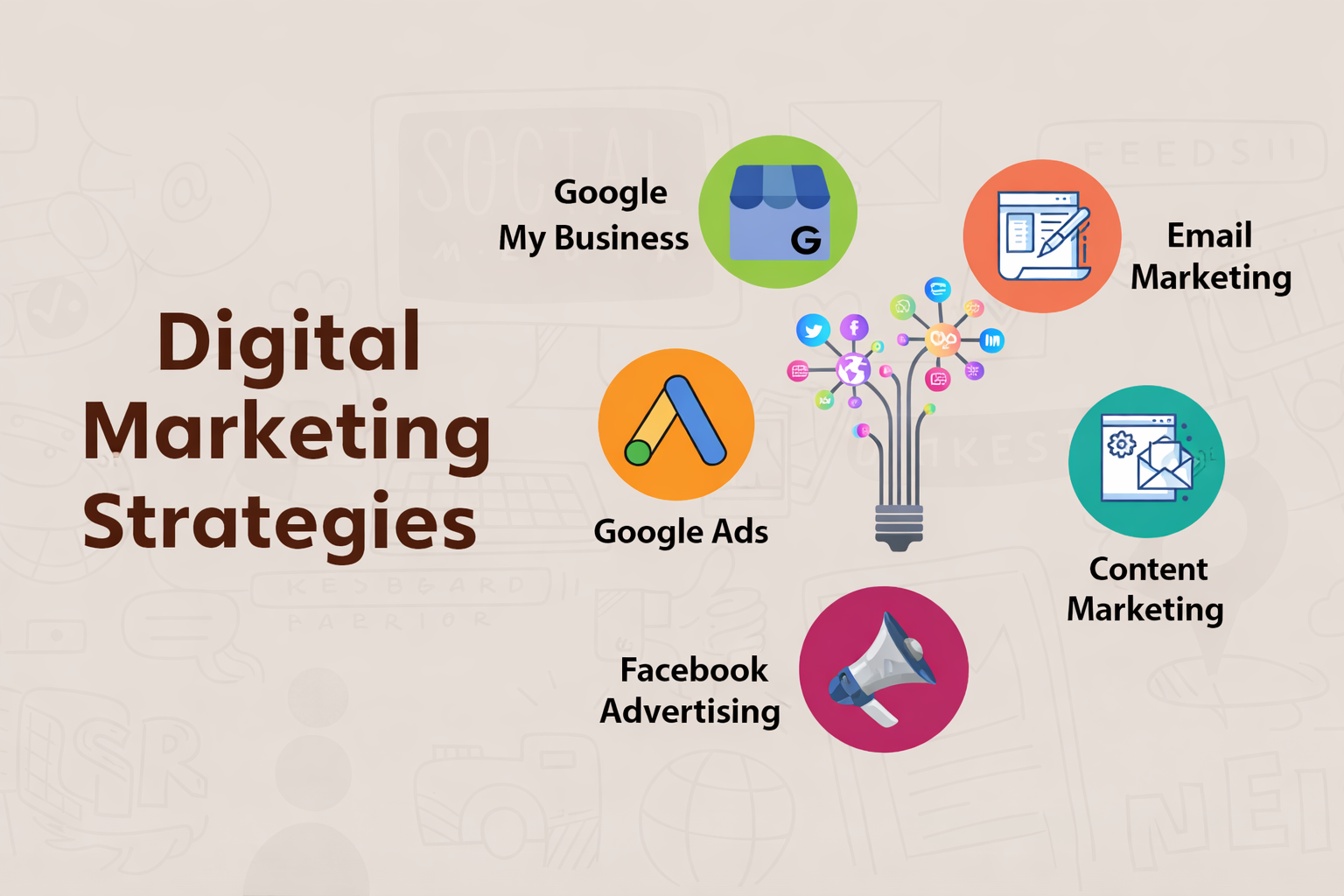
A digital marketing strategy is a structured plan that helps businesses promote their products or services online using the right channels and methods. In today’s competitive market, having a clear digital marketing strategy is essential for attracting customers, increasing brand awareness, and generating consistent sales.
Whether you run a small business, startup, service company, or online store, a well-planned digital marketing strategy helps you achieve long-term growth and stay ahead of competitors.
In this guide, you will learn what a digital marketing strategy is, why it is important, and how to create an effective strategy for your business.
What is a Digital Marketing Strategy?
A digital marketing strategy is a plan that outlines how a business will use online channels such as search engines, social media, websites, email, and online advertising to achieve marketing goals.
It helps businesses identify their target audience, choose the right marketing channels, and measure results effectively.
In simple terms, a digital marketing strategy is a roadmap that guides your business toward online success.
Why is a Digital Marketing Strategy Important for Businesses?
A digital marketing strategy is important because it provides direction and ensures that marketing efforts are organized and effective. Without a strategy, businesses may waste time and money on activities that do not produce results.
Key reasons a digital marketing strategy is important:
- Helps businesses achieve marketing goals
- Improves customer targeting
- Increases brand visibility
- Generates more leads and sales
- Saves time and marketing costs
- Provides measurable results
Key Components of a Digital Marketing Strategy
A successful digital marketing strategy includes several essential components that work together to drive business growth.
Define Business Goals
The first step in creating a digital marketing strategy is defining clear business goals.
Examples of business goals:
- Increase website traffic
- Generate more leads
- Improve brand awareness
- Boost sales
- Expand market reach
Clear goals help businesses measure success and track progress.
Identify Target Audience
Understanding your target audience is critical for creating effective marketing campaigns.
Businesses should identify:
- Age group
- Location
- Interests
- Needs
- Buying behavior
Targeting the right audience improves marketing efficiency and results.
Choose the Right Marketing Channels
Different marketing channels serve different purposes. Businesses should select channels based on their target audience and goals.
Common digital marketing channels include:
- Search Engine Optimization (SEO)
- Social Media Marketing
- Pay-Per-Click Advertising (PPC)
- Content Marketing
- Email Marketing
- Local SEO
Using the right channels ensures better performance and higher returns.
Create High-Quality Content
Content plays a major role in digital marketing success. Businesses need to create useful and engaging content that attracts customers and builds trust.
Examples of content:
- Blog posts
- Articles
- Videos
- Social media posts
- Infographics
- Guides
High-quality content improves search rankings and customer engagement.
Set a Marketing Budget
A marketing budget helps businesses control spending and allocate resources effectively.
Businesses should decide:
- Monthly marketing budget
- Advertising budget
- Content creation costs
- Tool and software expenses
Proper budgeting ensures sustainable marketing growth.
Step-by-Step Process to Create a Digital Marketing Strategy
Creating a digital marketing strategy becomes easier when businesses follow a structured process.
Step 1: Analyze Your Current Situation
Evaluate your current marketing performance and identify strengths and weaknesses.
Businesses should analyze:
- Website traffic
- Customer behavior
- Competitor performance
- Market trends
This analysis helps businesses make informed decisions.
Step 2: Conduct Market Research
Market research helps businesses understand customer needs and industry trends.
Research areas include:
- Customer preferences
- Competitor strategies
- Industry demand
- Market opportunities
Good research improves strategy effectiveness.
Step 3: Set Clear Marketing Objectives
Marketing objectives should be specific, measurable, and realistic.
Examples:
- Increase website traffic by 30%
- Generate 50 new leads per month
- Improve social media engagement
- Increase online sales
Clear objectives guide marketing activities.
Step 4: Implement Marketing Campaigns
After planning, businesses should launch marketing campaigns using selected channels.
Examples of campaigns:
- SEO optimization
- Social media promotions
- Paid advertising campaigns
- Email marketing campaigns
Consistent execution leads to better results.
Step 5: Monitor and Optimize Performance
Monitoring performance helps businesses identify what works and what needs improvement.
Businesses should track:
- Website traffic
- Leads and conversions
- Customer engagement
- Advertising performance
Continuous optimization improves marketing success.
Benefits of Having a Digital Marketing Strategy
Having a digital marketing strategy provides many advantages for businesses.
Top benefits include:
- Better planning and organization
- Increased marketing efficiency
- Higher return on investment (ROI)
- Improved customer targeting
- Consistent business growth
- Stronger brand presence
A well-planned strategy helps businesses achieve long-term success.
Common Digital Marketing Strategies Used by Businesses
Businesses use different strategies depending on their goals and industry.
Popular digital marketing strategies include:
- Search Engine Optimization (SEO)
- Social Media Marketing
- Content Marketing
- Email Marketing
- Paid Advertising (PPC)
- Local SEO
- Video Marketing
Using multiple strategies together produces better results.
How Often Should Businesses Update Their Digital Marketing Strategy?
Businesses should review and update their digital marketing strategy regularly to stay competitive and adapt to market changes.
Recommended update frequency:
- Review performance every month
- Update strategy every 3 to 6 months
- Adjust campaigns based on results
Regular updates ensure continued growth and effectiveness.
Who Needs a Digital Marketing Strategy?
A digital marketing strategy is essential for almost every type of business.
Businesses that benefit from a digital marketing strategy include:
- Small businesses
- Startups
- Clinics and hospitals
- Educational institutions
- Real estate companies
- eCommerce stores
- Service providers
- Local businesses
Any business that wants to grow online needs a digital marketing strategy.
Frequently Asked Questions About Digital Marketing Strategy
What is a digital marketing strategy?
A digital marketing strategy is a plan that helps businesses promote their products or services online using various digital channels.
Why do businesses need a digital marketing strategy?
Businesses need a digital marketing strategy to achieve marketing goals, improve targeting, and generate consistent leads and sales.
How long does it take to see results from a digital marketing strategy?
Results depend on the marketing methods used. SEO usually takes 3 to 6 months, while paid advertising can produce faster results.
Can small businesses use digital marketing strategies?
Yes. Digital marketing strategies are suitable for businesses of all sizes and help small businesses compete effectively.
Conclusion
A digital marketing strategy is essential for businesses that want to succeed in today’s digital world. It provides direction, improves efficiency, and helps businesses achieve their marketing goals.
By creating a clear digital marketing strategy and regularly monitoring performance, businesses can attract more customers, increase sales, and achieve long-term growth.