
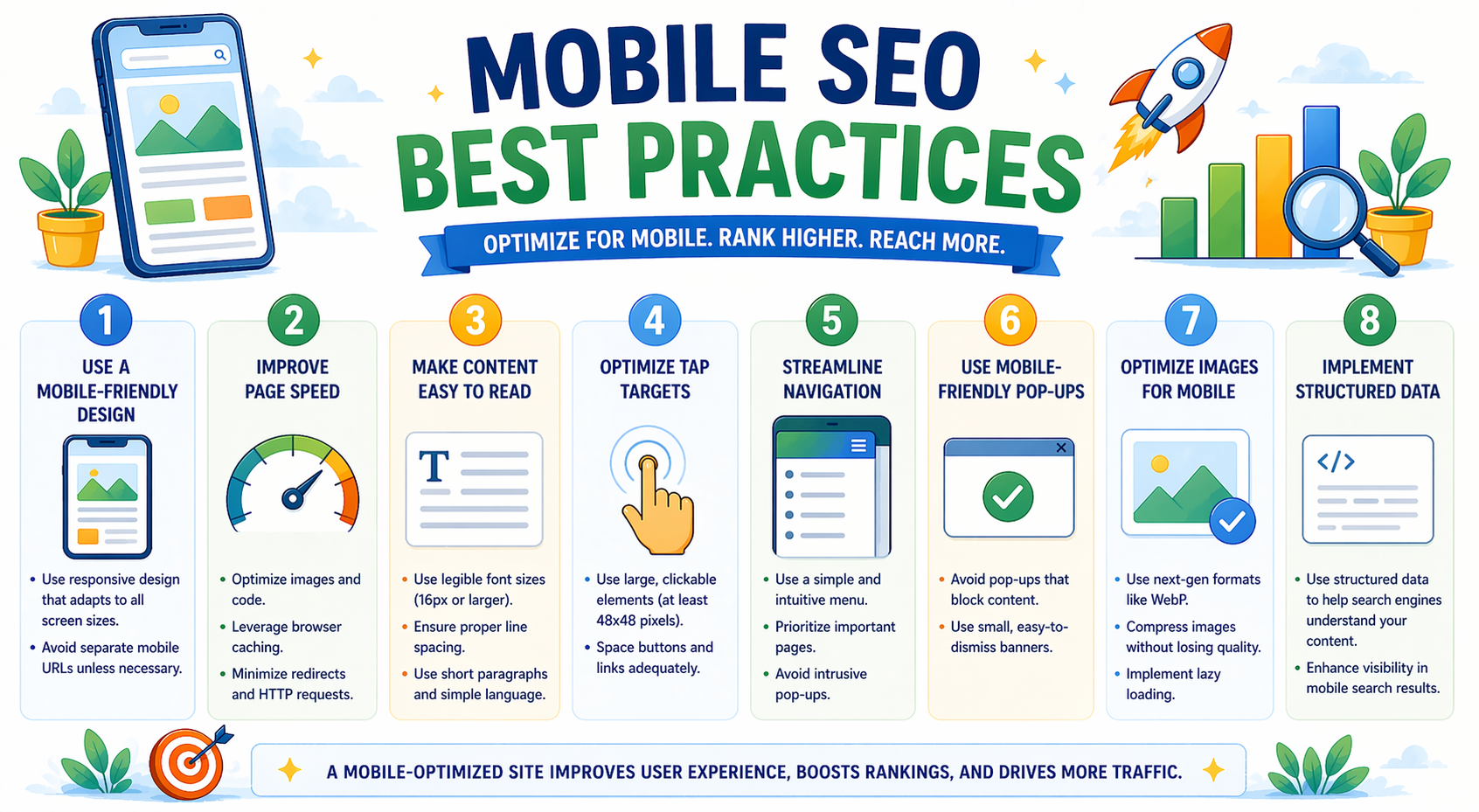
Mobile devices have become the primary way people access the internet. Today, most website visitors use smartphones or tablets to search for information, services, and products. Because of this shift, search engines like Google now prioritize mobile-friendly websites when ranking search results.
Mobile SEO focuses on optimizing your website so it performs well on mobile devices. A mobile-optimized website loads quickly, displays correctly, and provides a smooth user experience.
In simple terms, mobile SEO ensures your website works perfectly on smartphones and helps improve search rankings.
What is Mobile SEO?
Mobile SEO is the process of optimizing a website to provide the best experience for users accessing it on mobile devices such as smartphones and tablets.
Mobile SEO includes:
- Responsive website design
- Fast loading speed
- Mobile-friendly navigation
- Optimized images
- Readable content
- Easy-to-click buttons
These elements help improve usability and search engine performance.
Why Mobile SEO is Important
Mobile SEO is essential for modern websites because mobile usage continues to grow every year.
Key Reasons Mobile SEO Matters
1) Google Uses Mobile-First Indexing
Google primarily evaluates the mobile version of a website when determining rankings.
2) Most Users Access Websites on Mobile
A majority of searches now come from mobile devices.
3) Improves User Experience
Mobile-friendly websites are easier to navigate.
4) Reduces Bounce Rate
Users stay longer on websites that load quickly.
5) Increases Conversions
Better usability leads to more inquiries and sales.
Signs Your Website Needs Mobile Optimization
You may need mobile optimization if:
- Pages load slowly on mobile
- Text is too small to read
- Buttons are difficult to click
- Images do not fit the screen
- Users leave quickly
- Mobile traffic is low
Fixing these issues improves performance.
Mobile SEO Best Practices
Follow these proven best practices to optimize your website for mobile devices.
1) Use Responsive Website Design
Responsive design allows your website to adjust automatically to different screen sizes.
Benefits:
- Better user experience
- Improved rankings
- Easier maintenance
- Consistent design across devices
Responsive design is the most important mobile SEO factor.
2) Improve Mobile Page Speed
Page speed is a major ranking factor for mobile SEO.
Slow websites can cause users to leave quickly.
Tips to Improve Speed
- Compress images
- Use optimized code
- Reduce file size
- Enable caching
- Use fast hosting
Fast-loading websites perform better in search results.
3) Use Mobile-Friendly Navigation
Navigation should be simple and easy to use on small screens.
Best practices:
- Use clear menus
- Keep navigation simple
- Use large buttons
- Avoid clutter
Easy navigation improves user experience.
4) Optimize Content for Mobile Screens
Mobile users prefer short and easy-to-read content.
Content Tips
- Use short paragraphs
- Use headings and subheadings
- Use bullet points
- Use readable font size
- Avoid long blocks of text
Clear content improves readability.
5) Optimize Images for Mobile Devices
Large images can slow down mobile websites.
Best practices:
- Compress images
- Use modern formats
- Use responsive images
- Avoid oversized files
Optimized images improve speed.
6) Use Large and Clickable Buttons
Buttons should be easy to tap on mobile screens.
Best practices:
- Use larger buttons
- Leave space between buttons
- Use clear labels
- Place buttons in visible areas
Clickable buttons improve usability.
7) Avoid Pop-Ups That Block Content
Large pop-ups can frustrate mobile users.
Instead:
- Use small banners
- Use simple notifications
- Avoid blocking the screen
User-friendly design improves engagement.
8) Optimize for Local Search
Many mobile searches are location-based.
Examples:
- digital marketing services near me
- SEO company in Hyderabad
- website design services nearby
Local optimization helps attract nearby customers.
9) Use Secure HTTPS Connection
Security is important for mobile users and search engines.
Benefits:
- Protects user data
- Builds trust
- Improves rankings
HTTPS is a standard requirement for modern websites.
Common Mobile SEO Mistakes to Avoid
Avoid these common mistakes to improve mobile performance.
- Slow loading speed
- Non-responsive design
- Small text size
- Large images
- Poor navigation
- Too many pop-ups
- Unoptimized content
Fixing these mistakes improves rankings.
How to Check if Your Website is Mobile-Friendly
You can evaluate your website using simple checks.
Look for:
- Fast loading speed
- Proper screen display
- Easy navigation
- Readable text
- Clickable buttons
Regular testing helps maintain performance.
Mobile SEO Checklist
Use this checklist to ensure your website is optimized.
- Responsive website design
- Fast loading speed
- Mobile-friendly navigation
- Optimized images
- Readable content
- Secure HTTPS
- No intrusive pop-ups
- Proper button size
- Mobile-friendly layout
This checklist helps maintain strong mobile performance.
Frequently Asked Questions (FAQs)
What is mobile SEO?
Mobile SEO is the process of optimizing a website to perform well on mobile devices like smartphones and tablets.
Why is mobile SEO important?
Mobile SEO improves user experience, increases website traffic, and helps websites rank higher in search results.
What is mobile-first indexing?
Mobile-first indexing means search engines primarily use the mobile version of a website to determine rankings.
How can I improve mobile website speed?
You can improve speed by compressing images, reducing file size, and using optimized website design.
Does mobile SEO affect Google rankings?
Yes. Mobile-friendly websites rank higher because search engines prioritize mobile usability.
Conclusion
Mobile SEO is essential for modern websites because most users access the internet through mobile devices. A mobile-friendly website improves user experience, increases traffic, and boosts search engine rankings.
By following mobile SEO best practices and avoiding common mistakes, businesses can ensure their websites perform well across all devices and achieve long-term growth.