
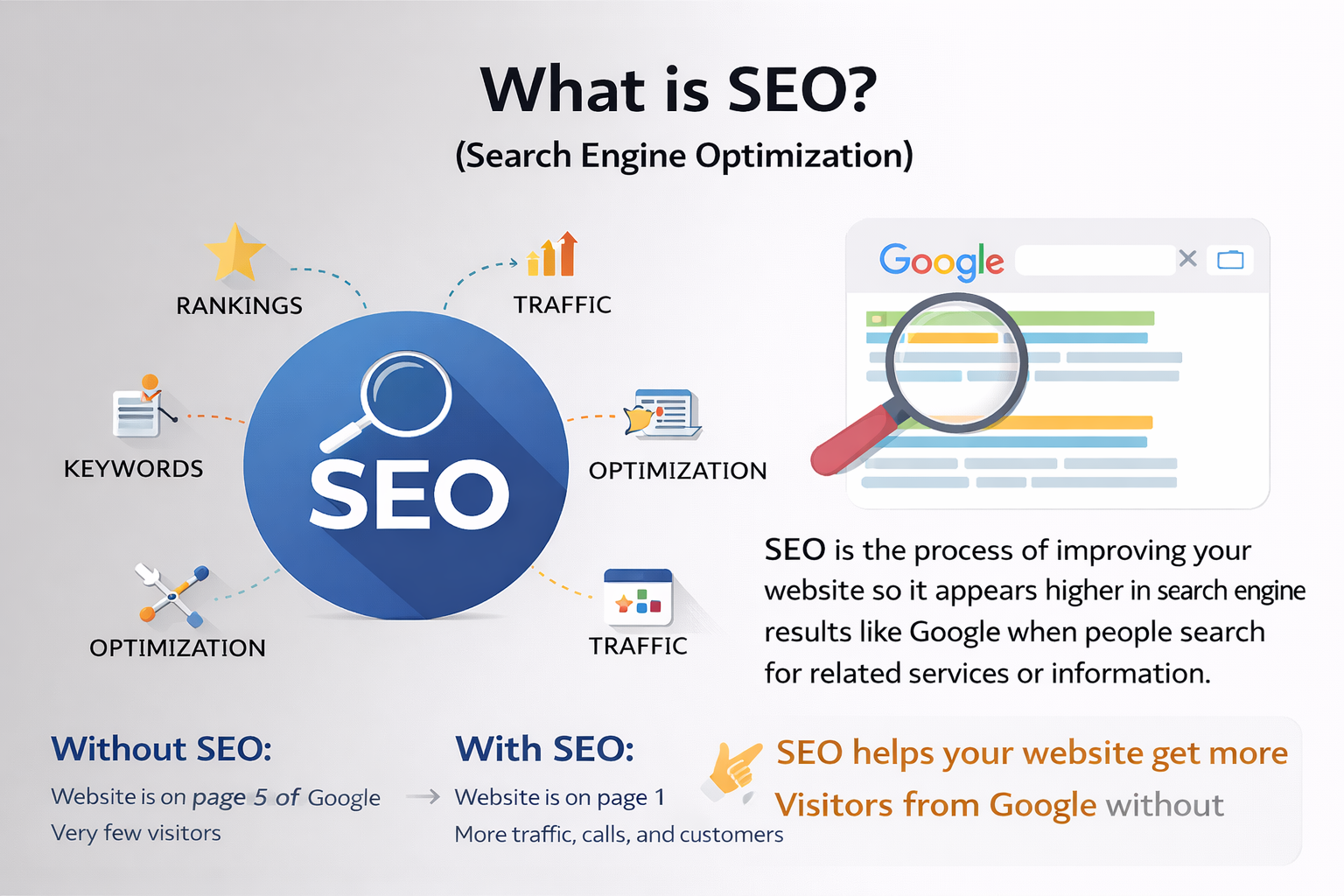
Search Engine Optimization (SEO) is one of the most important digital marketing strategies for improving website visibility on search engines like Google. Businesses use SEO to attract organic traffic, generate leads, and increase sales without paying for advertisements.
In today’s digital world, customers search online before making decisions. If your website appears at the top of search results, more people will visit your website and learn about your products or services.
In this guide, you will learn what SEO is, how it works, and why it is essential for business growth.
What is SEO?
SEO stands for Search Engine Optimization. It is the process of improving a website so that it ranks higher on search engines like Google, Bing, and Yahoo.
The main goal of SEO is to increase organic traffic by making a website more visible to people searching for related products or services.
In simple words, SEO helps your website appear on the first page of search results.
Why is SEO Important for Businesses?
SEO is important because most customers search online before buying products or services. Businesses that rank higher on search engines get more traffic, leads, and sales.
Key reasons SEO is important:
- Increases website visibility
- Generates organic traffic
- Builds brand credibility
- Improves customer trust
- Reduces advertising costs
- Supports long-term growth
SEO helps businesses reach customers who are actively searching for their services.
How Does SEO Work?
SEO works by helping search engines understand your website content and determine whether it is relevant to user searches.
Search engines use algorithms to rank websites based on various factors such as content quality, keywords, and website performance.
Basic SEO process:
- Users search for information on Google
- Search engines scan websites
- Relevant websites are ranked
- Users click on search results
- Websites receive traffic
SEO improves website performance so that search engines rank it higher.
Types of SEO
SEO includes different types that work together to improve website rankings.
On-Page SEO
On-page SEO focuses on optimizing elements within a website.
Examples:
- Keyword optimization
- Title tags and meta descriptions
- Content quality
- Internal linking
- Image optimization
On-page SEO helps search engines understand your content.
Off-Page SEO
Off-page SEO focuses on activities outside your website that improve credibility and authority.
Examples:
- Backlinks from other websites
- Social media sharing
- Online reviews
- Brand mentions
Off-page SEO helps build trust and improve rankings.
Technical SEO
Technical SEO focuses on improving the technical aspects of a website.
Examples:
- Website speed optimization
- Mobile-friendly design
- Secure website (HTTPS)
- XML sitemap
- Crawlability
Technical SEO ensures that search engines can access and index your website.
Key Components of SEO
Successful SEO depends on several important components.
Keywords
Keywords are the words or phrases people type into search engines.
Example keywords:
- digital marketing services
- SEO company
- online marketing
Using the right keywords helps search engines match your website with user searches.
Content
High-quality content is essential for SEO success. Search engines prioritize useful, informative, and relevant content.
Content should be:
- Clear and informative
- Keyword optimized
- Regularly updated
- Easy to read
Good content attracts visitors and improves rankings.
Backlinks
Backlinks are links from other websites to your website.
Search engines consider backlinks as a sign of trust and authority.
More high-quality backlinks usually lead to better search rankings.
Benefits of SEO
SEO provides many benefits for businesses and websites.
Top benefits include:
- Increased website traffic
- Higher search engine rankings
- Better brand visibility
- More leads and customers
- Cost-effective marketing
- Long-term results
SEO is one of the most powerful strategies for sustainable online growth.
How Long Does SEO Take to Show Results?
SEO is a long-term strategy that requires consistent effort.
Typical timeline:
- Initial improvements: 1 to 3 months
- Noticeable results: 3 to 6 months
- Strong rankings: 6 to 12 months
Results depend on competition, website quality, and SEO strategy.
Who Needs SEO?
SEO is useful for almost every type of business and website.
Businesses that need SEO include:
- Small businesses
- Startups
- Clinics and hospitals
- Educational institutions
- eCommerce stores
- Service providers
- Local businesses
Any business that wants online visibility needs SEO.
Frequently Asked Questions About SEO
1) What does SEO mean?
SEO stands for Search Engine Optimization. It is the process of improving a website to rank higher on search engines and attract more visitors.
2) How does SEO work?
SEO works by optimizing website content, keywords, and technical performance so that search engines rank the website higher in search results.
3) How long does SEO take to work?
SEO usually takes 3 to 6 months to show noticeable results, depending on competition and website quality.
4) Is SEO better than paid advertising?
SEO is better for long-term results because it provides organic traffic without continuous advertising costs.
5) Can small businesses use SEO?
Yes. SEO is highly effective for small businesses because it helps them attract local customers and compete with larger companies.
Conclusion
SEO is a powerful digital marketing strategy that helps businesses improve website visibility, attract customers, and grow online. By understanding how SEO works and applying the right techniques, businesses can achieve long-term success and stay competitive in the digital marketplace.
Investing in SEO is one of the smartest decisions businesses can make to increase traffic and generate consistent leads.